

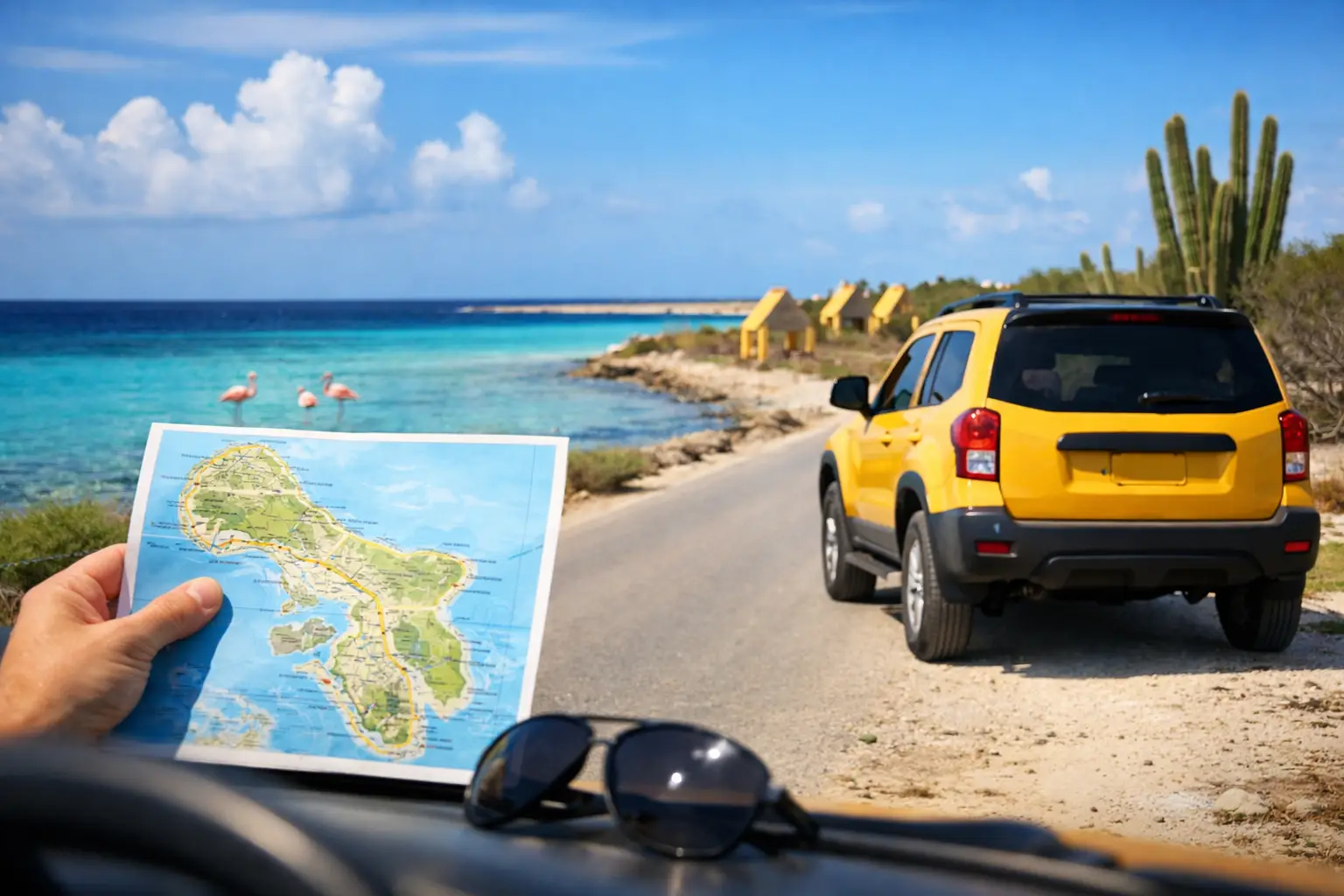
The first surprise for many visitors is how quickly you can go from airport pickup to salt flats, dive sites, or dinner by the water. Bonaire is not a place where you want to spend your vacation waiting on taxis or figuring out a complicated bus route. Having your own vehicle changes the trip right away – and knowing a few local driving basics makes it even easier.
If you’re looking for practical driving in Bonaire tips for tourists, the good news is that island driving is generally straightforward. The roads are manageable, distances are short, and most visitors settle in fast. Still, Bonaire has a few quirks that are worth understanding before you turn the key and head out.
Driving in Bonaire tips for tourists: what to expect
Bonaire drives on the right side of the road, which feels familiar for US travelers. Road signs are generally easy to follow, and if you’ve driven in a small beach town or on rural roads before, the overall pace will not feel intimidating.
That said, this is still island driving. Some roads are paved and smooth, especially around Kralendijk and the main hotel areas, while others are rougher, narrower, or unpaved. If your plans include remote beaches, dive entries, or Washington Slagbaai National Park, road conditions can change quickly from easy to bumpy.
The biggest mindset shift is simple: do not rush. Bonaire rewards slower, more relaxed driving. You are not crossing long distances, and arriving five minutes later is usually a much better trade than hitting a pothole too fast or missing a turn to a great snorkel spot.
Choose the right vehicle for your plans
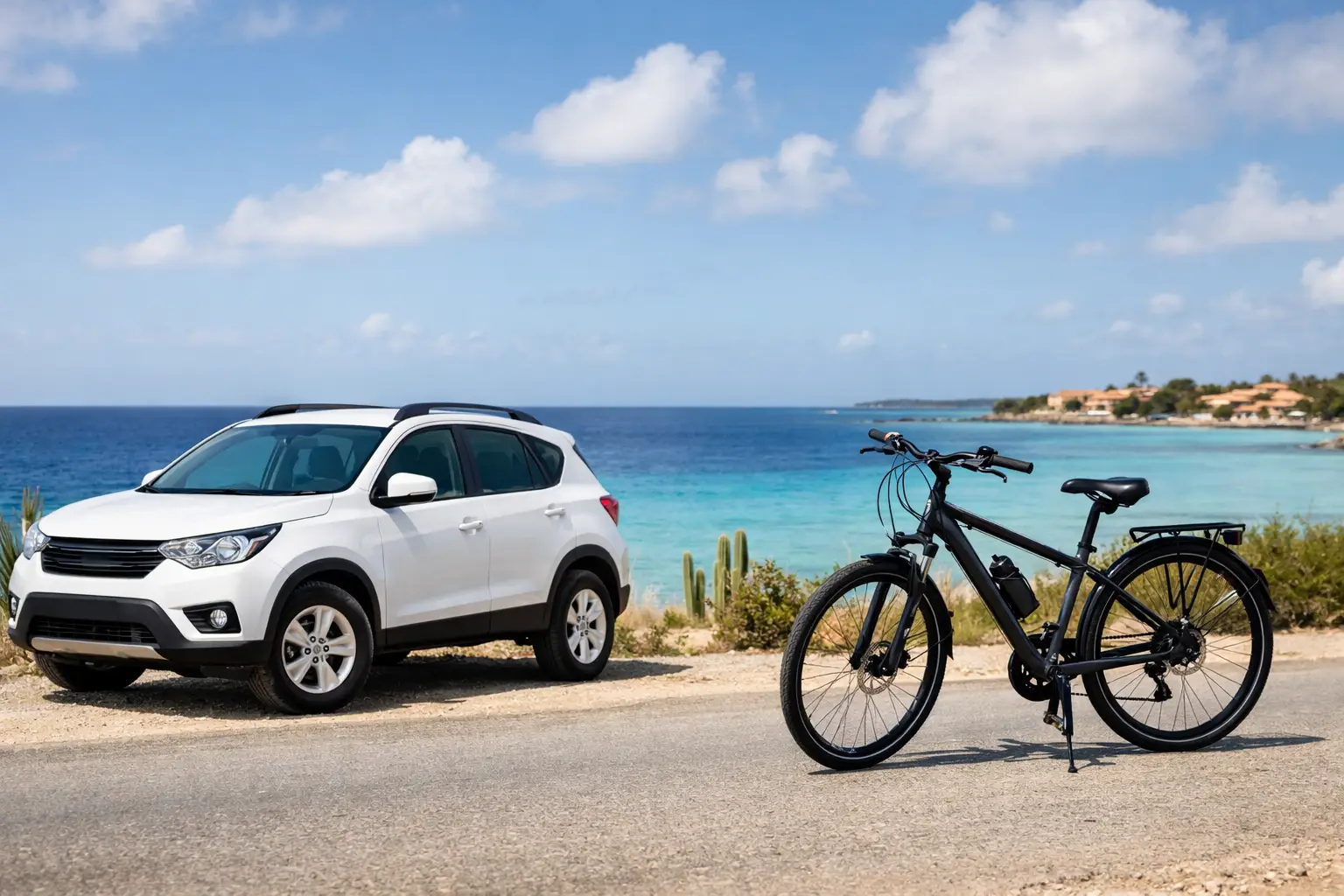
A lot of driving stress disappears when you rent the right type of vehicle from the start. If you’re staying near town, eating out, and visiting popular beaches on paved roads, a smaller economy car may be all you need. For couples traveling light, that can be the easiest and most budget-friendly option.
But it depends on how you plan to use your days. If you’re carrying dive tanks, coolers, beach chairs, or a full family’s gear, extra space matters. If you want to reach rougher coastal roads or spend time exploring less-developed parts of the island, an SUV or pickup can make the trip more comfortable and practical.
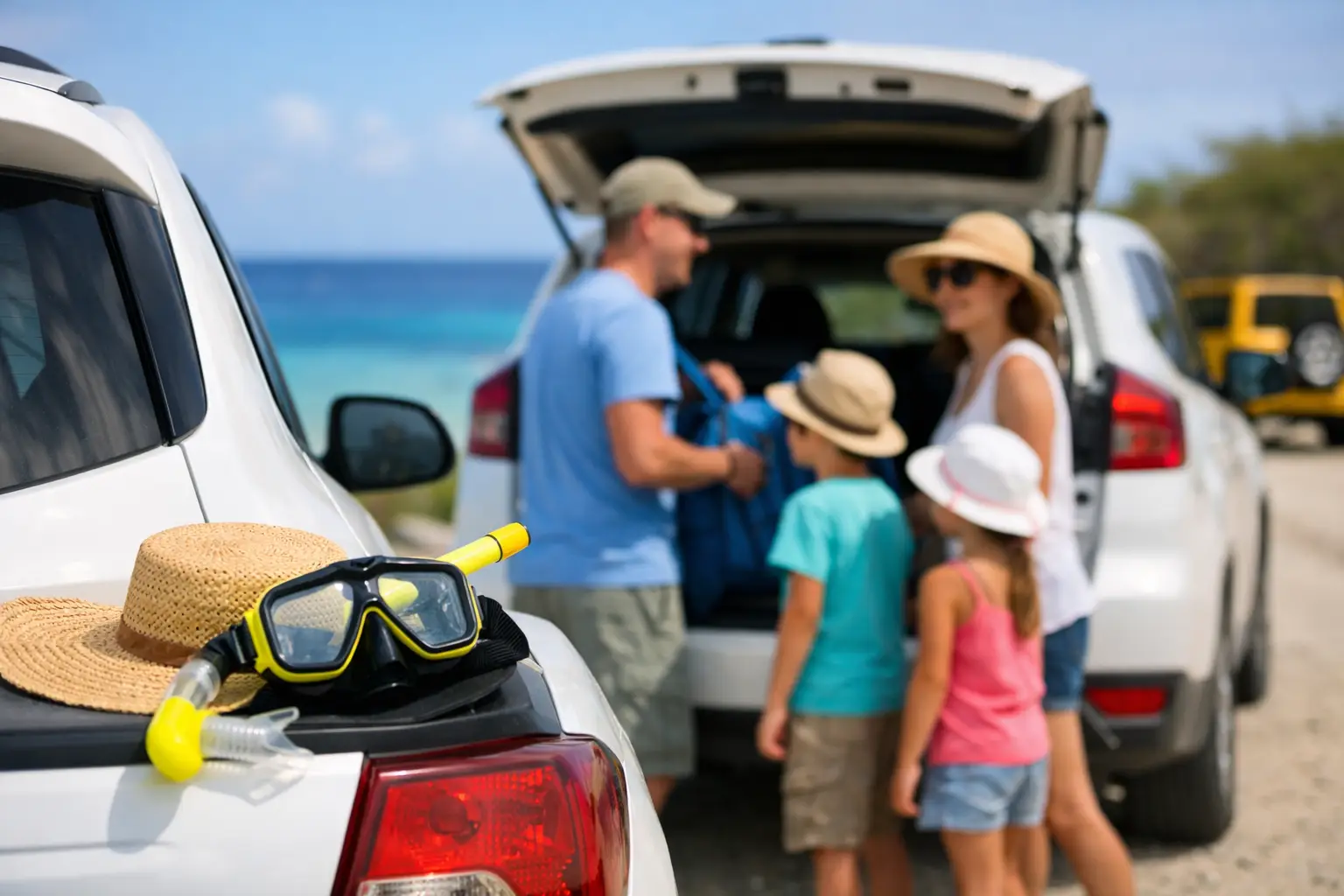
This is especially true for divers. Bonaire is famous for shore diving, and hauling gear in and out of a compact car gets old fast. A vehicle with room for tanks and wetsuits often makes the day feel much easier.
The road conditions that catch visitors off guard
Potholes are the thing most tourists mention after a few days on the island. They are not everywhere, but they show up often enough that you should stay alert, especially on secondary roads and after dark. If the pavement ahead looks uneven, slow down early rather than swerving at the last second.
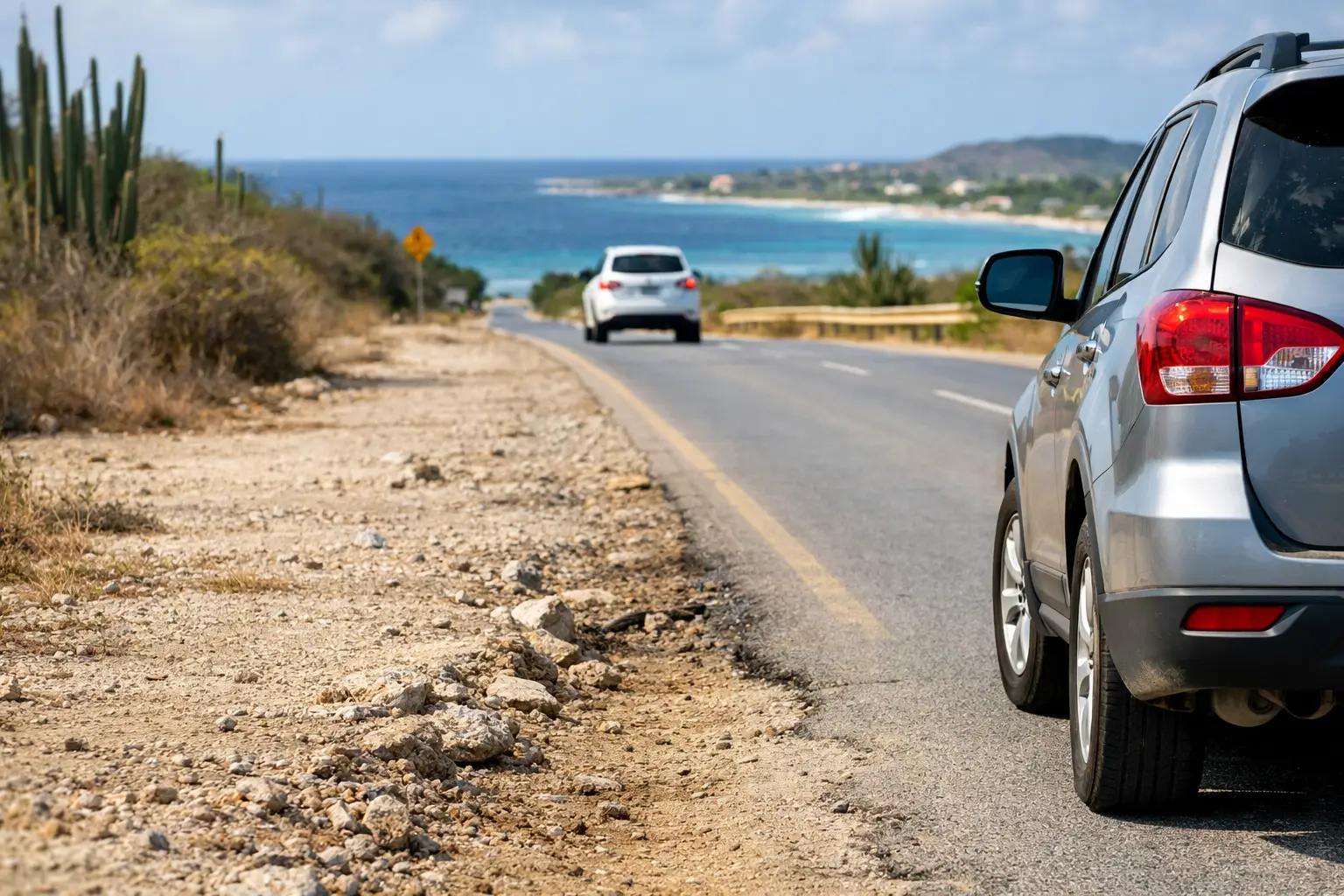
Unpaved roads are also common once you get away from the main developed areas. These roads can be dusty, rocky, and washboarded. They are usually very manageable if you take your time, but they are not the place for aggressive driving.
In some areas, especially around natural attractions and dive access points, the road may look less like a typical street and more like a marked path with coral rock and loose gravel. That’s normal on Bonaire. The right vehicle helps, but your speed matters even more.
Go easy after dark
Daytime driving is much simpler for first-time visitors. At night, the island feels different. Roads can be dimly lit, some street signage is harder to spot, and potholes are tougher to see in time.
If you do drive after sunset, take it slower than you think you need to. Watch carefully for turns, cyclists, and animals near the road. If you’ve had a long travel day, it may be smarter to keep the first evening simple and save longer drives for the next morning.
Watch for donkeys, goats, and unexpected stops
Bonaire has plenty of natural beauty, and sometimes that beauty wanders close to the road. Donkeys and goats can appear in areas where visitors are least expecting them, especially outside the busier parts of town.
You should also expect drivers to move at a relaxed pace. Sudden stops are not unusual if someone is yielding, turning toward a beach road, or slowing for an animal. Keep extra following distance and assume the car ahead may brake without much warning.
This is one of those places where defensive driving means calm driving. Leave space, stay patient, and avoid quick reactions.
Parking is usually easy, but use common sense
One of the nice things about Bonaire is that parking is often less stressful than in larger destinations. At many beaches, dive sites, and casual restaurants, parking is simple and close by.
Still, don’t treat that convenience casually. Park in clear, appropriate areas and avoid blocking access roads or other vehicles. At popular waterfront spots or busy dining times, things can tighten up quickly.
If you’re driving with dive gear or luggage, use common sense about what you leave visible inside the vehicle. Even on a relaxed island, it’s better not to leave valuables out in plain sight. Take phones, wallets, passports, and anything important with you.
Navigation is easy once you understand the island layout
Bonaire is not a hard island to learn. After a day or two, most visitors get comfortable moving between the airport, Kralendijk, resort areas, beaches, and main roads south or north.
The challenge is less about getting seriously lost and more about missing a turn onto a smaller road or overshooting a dive site marker. A navigation app helps, but you should not rely on it blindly for every rough access road. Sometimes the route is technically correct but not the one you’d choose if you could see the surface in advance.
If you’re unsure, ask a local before heading out. That small bit of guidance can save time and make sure your vehicle matches the route you plan to take.
A few local habits to remember
Speeding does not get you much on Bonaire. Distances are short, and the island is best enjoyed at an easy pace. Drive respectfully through town, slow down near pedestrian areas, and be especially careful around cyclists and scooters.
Seat belts matter, and basic road rules still apply even though the atmosphere is relaxed. If you’re used to high-speed highways and tightly timed schedules, Bonaire may feel slower than home. That’s part of the appeal.
You also may notice that some intersections feel more informal than what you’re used to in the US. When in doubt, slow down, make eye contact if possible, and proceed carefully rather than assuming everyone is following the same rhythm.
Best advice for beach days and dive days
Salt, sand, wet gear, and sun are part of the fun here, but they can be rough on both you and the vehicle if you’re not prepared. Keep a towel handy, shake off as much sand as possible, and avoid tossing dripping gear in without thinking about the rest of your day.
If you’re planning a full dive schedule, build in room for loading and unloading. A cramped vehicle can work for a short trip, but after several days of tanks, fins, and bags, comfort starts to matter. That’s one reason many visitors choose a practical island-ready rental instead of just the cheapest option available.
If you want a simple arrival and a vehicle suited to beach and dive travel, Bonaire Rent a Car is built around exactly that kind of trip, with free airport pickup and a fleet that makes island driving easier from day one.
When driving may not be worth it
There are a few cases where you may not need a car every single day. If you’re staying in a walkable area and only plan a very light schedule, you might drive less than expected. Some travelers prefer a smaller vehicle for town and short trips rather than a larger one for the whole stay.
But for most visitors, flexibility is the real value. The ability to leave early for a quiet beach, stop for lunch on your own timing, or change plans when the weather shifts is a big part of enjoying Bonaire. On an island known for shore diving, scenic coastlines, and spread-out spots worth visiting, that freedom tends to matter more than people expect.
The easiest way to enjoy driving here is to treat it like the island itself – simple, unhurried, and a little adventurous. Slow down, pick the right vehicle for your plans, and give yourself room to enjoy the road as part of the trip.