

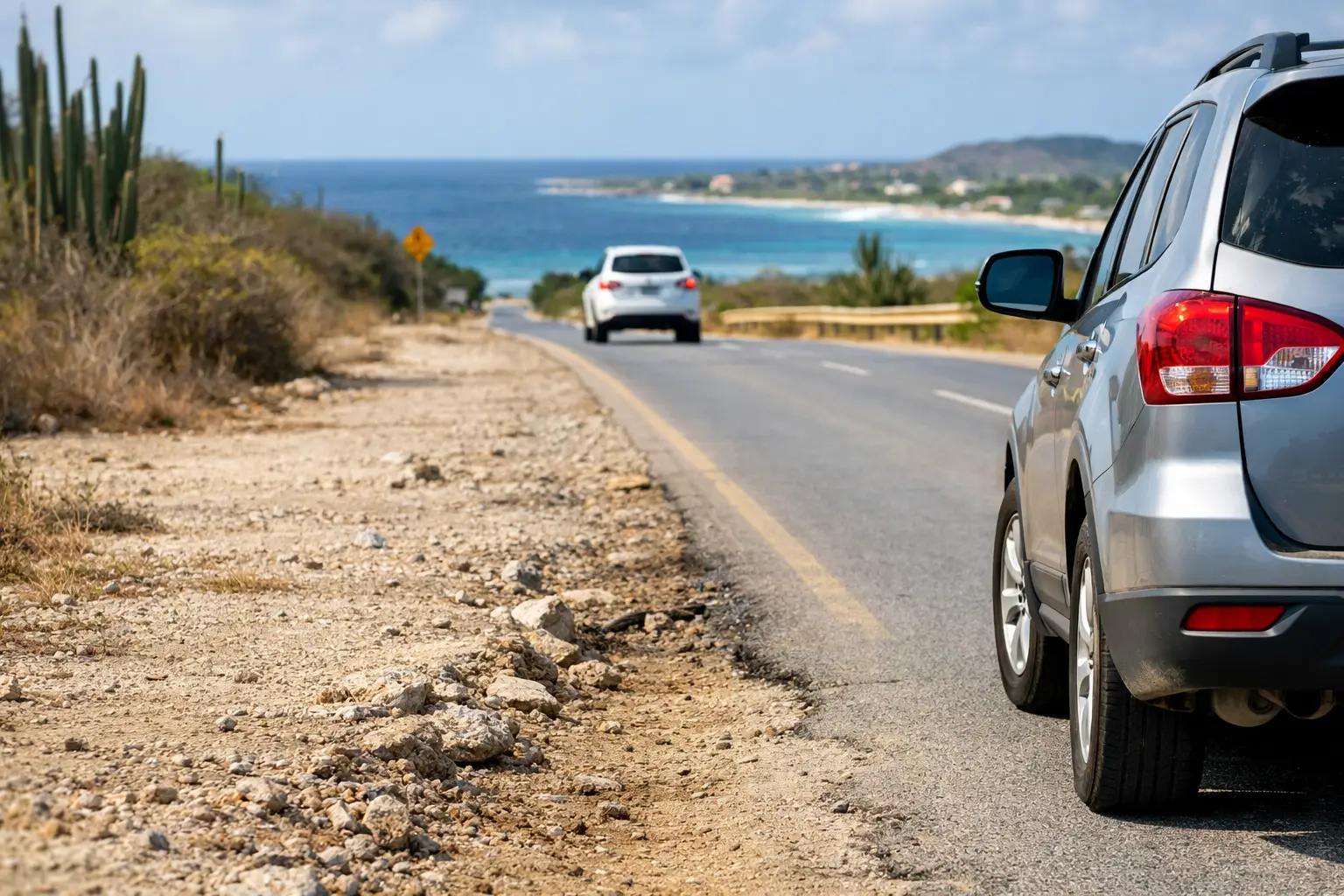
Your first drive out of Flamingo Airport may feel surprisingly easy: within minutes, you can be on a smooth paved road headed toward Kralendijk, your hotel, or the coast. But are Bonaire roads paved everywhere? Not quite. The short answer is that most roads visitors use every day are paved, while some of the island’s most memorable places sit at the end of rougher, unpaved routes.
That is not a reason to worry. It is simply a reason to choose a vehicle that matches the vacation you have planned. A compact car is a great fit for many Bonaire stays. If your itinerary includes remote beaches, heavy dive gear, or Washington Slagbaai National Park, a higher-clearance SUV or pickup can make the day more comfortable.
Are Bonaire roads paved in the main visitor areas?
Yes. Kralendijk, the airport area, major hotel zones, grocery stores, restaurants, and many popular beaches are connected by paved roads. Visitors who plan to spend their time dining in town, snorkeling close to shore, visiting beach clubs, and diving along the west coast can generally expect normal paved-road driving.
The main route south toward the salt pans, slave huts, windsurfing areas, and beaches around Sorobon is paved. The road north along the west coast is also paved for much of the drive, including routes used to reach many well-known shore dive sites. You may find narrow sections, patches, speed bumps, or uneven edges, but these roads are manageable with an ordinary rental car when driven with care.
Bonaire is small, so the distances are friendly. Still, island roads are not built like wide US highways. Expect two-lane roads, limited street lighting outside town, and fewer signs than you may be used to. Driving slowly is not just safer – it gives you time to enjoy the view and spot the occasional goat or donkey near the roadside.
Where pavement ends on Bonaire
Unpaved roads are most common once you leave the main routes. Some roads leading to quieter beaches, east-coast viewpoints, and less-developed neighborhoods are made of gravel, coral stone, or compacted dirt. These can be bumpy, dusty, and uneven, especially after weather changes or frequent use.
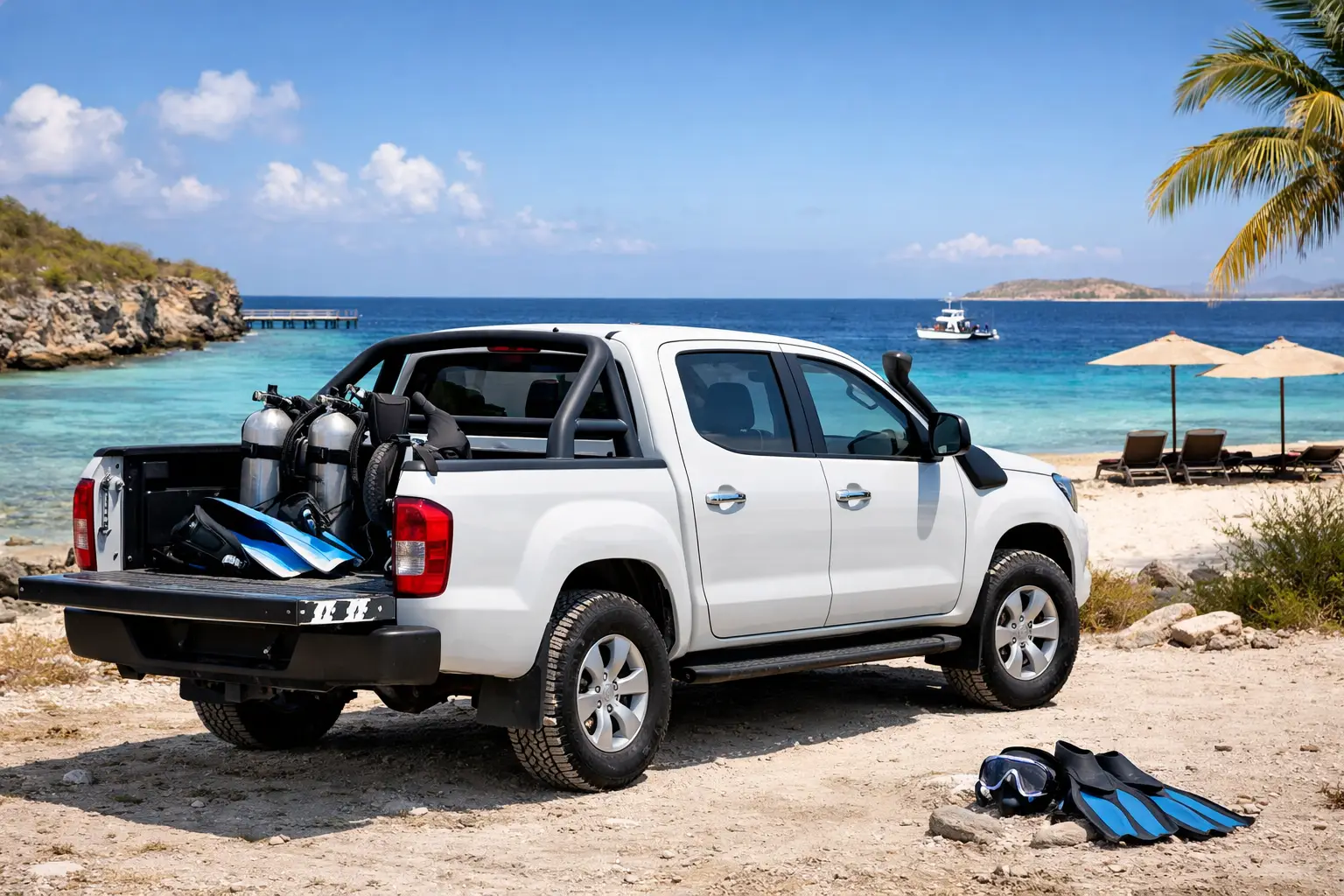
Washington Slagbaai National Park is the best-known example. Its scenic driving routes take visitors through a wild, beautiful part of the island, but the roads can be rocky and rough. High clearance is a smart choice there. A pickup or SUV gives you more confidence over uneven ground and more room for towels, coolers, snorkeling equipment, and dive gear.
The east coast can also be more rugged than the calm west side. The trade winds are stronger, the landscape is drier and more exposed, and certain access roads are less maintained. You do not need to chase every unpaved track to have a wonderful Bonaire vacation. If a road looks deeply rutted, flooded, unusually rocky, or beyond your comfort level, turn around and choose another destination.
Which rental vehicle makes sense for your plans?
The right choice depends less on whether roads are paved and more on how you want to explore. For a couple staying near Kralendijk, driving to restaurants, supermarkets, and west-coast beaches, an economy car or sedan is often practical and easy to park. The island’s main roads do not require a large vehicle.
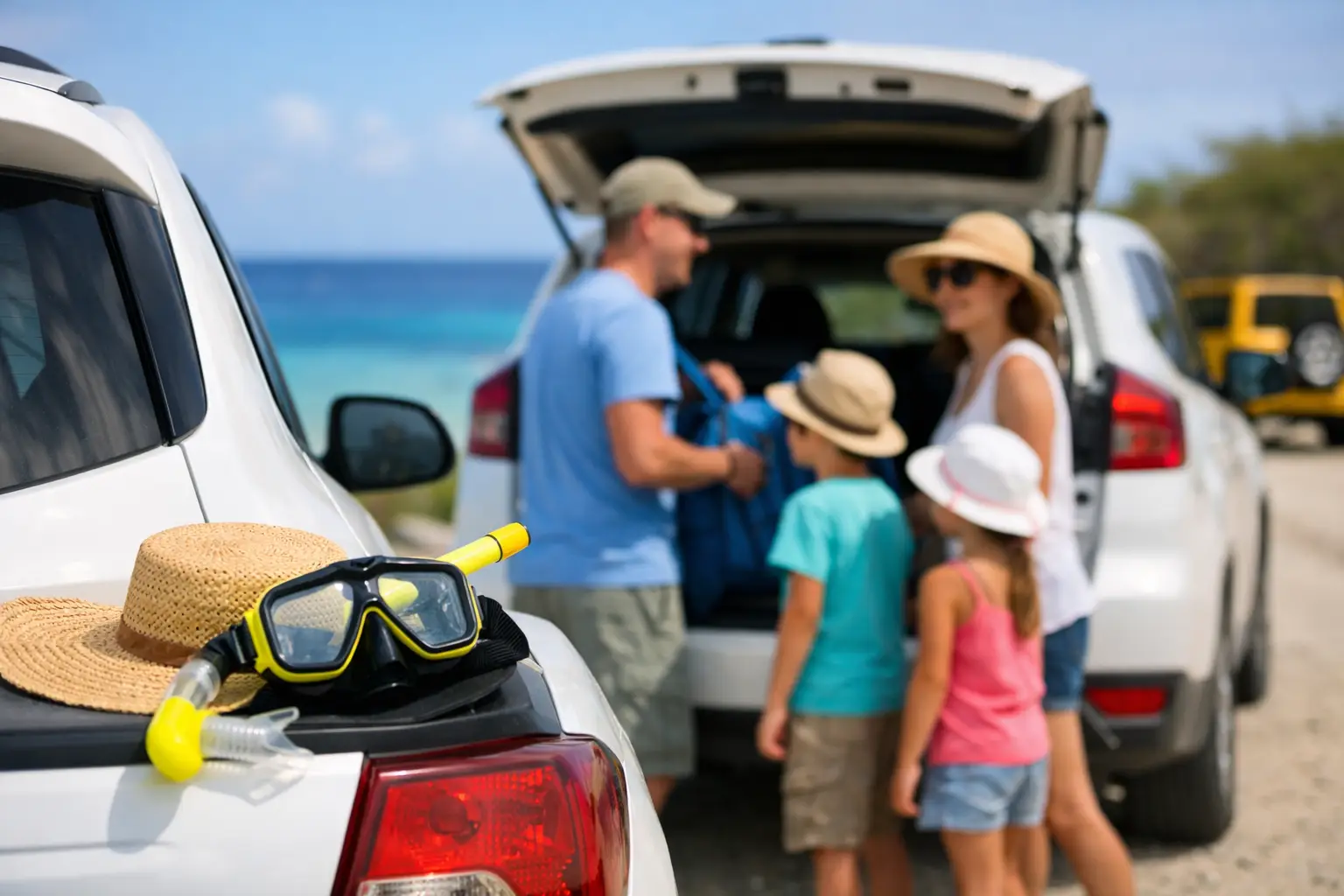
Families, groups, and divers often appreciate the additional space of an SUV or pickup. Tanks, bags, rinsing gear, beach chairs, and groceries add up quickly. A pickup also suits travelers who want extra ground clearance for the national park or rougher access roads without making every outing a logistical puzzle.
A specialty vehicle can be part of the fun if your trip is built around island exploration. The key is to book for the places you truly plan to go, rather than paying for more vehicle than you need. If you are unsure, a local rental team can help you match your itinerary to a vehicle category before arrival.
What road conditions should first-time visitors expect?
Bonaire driving is relaxed when you give it the attention it deserves. The roads may be paved, but the environment is distinctly Caribbean. Conditions can change quickly from a smooth town street to a narrow coastal lane with loose gravel at the edges.
Keep these practical habits in mind:
- Drive on the right side of the road and wear seat belts.
- Slow down for speed bumps, which may appear with limited warning.
- Watch carefully for donkeys, goats, iguanas, and pedestrians, particularly outside town and after dark.
- Avoid driving fast on unpaved roads. Loose stones and washboard surfaces can make a rough ride even rougher.
- Do not assume every remote beach has lighting, cell service, or an easy turnaround spot.
Road signs may be less frequent than at home, and street names are not always the easiest way to navigate. Downloading an offline map before setting out can be useful, particularly if you plan to explore the north or east side of the island. It also helps to start longer drives earlier in the day, when you have plenty of light and time to stop wherever the scenery catches your eye.
Driving to dive sites and beaches
One of the best parts of renting a car on Bonaire is being able to build the day around the water. Many shore dive sites and snorkeling spots are accessed from paved roads or short, simple pull-offs. You can load the car, choose a site based on conditions, and move at your own pace.
That flexibility matters because the best location can depend on wind, current, your experience level, and whether you are traveling with gear. A vehicle with cargo room is especially helpful for divers, while travelers who only need masks, fins, and a beach bag may be perfectly happy in a smaller car.
Be thoughtful when parking near the coast. Use designated spaces where available, keep valuables out of sight, and avoid blocking driveways or narrow roads. At remote sites, park on stable ground rather than soft sand or an uneven shoulder. A few extra seconds spent choosing a good spot can save you a frustrating start to the drive home.
Rain, nighttime, and other times to take extra care
Bonaire is known for sunny weather, but rain can still happen. When it does, unpaved roads may become slick or develop puddles that hide holes and uneven ground. Give yourself more stopping distance and avoid rushing through standing water on unfamiliar roads.
Night driving deserves extra caution as well. Main roads around Kralendijk are easier to navigate, but roads outside town can be dark. Animals are harder to see, shoulders can disappear, and a missed turn may take longer to correct. If you are returning from dinner or a sunset stop, drive slowly and stay alert.
Fuel planning is another easy habit that helps. You will not need to drive far across Bonaire, but it is still wise to avoid heading toward the park or a remote beach with a nearly empty tank. Fill up before a bigger exploration day, bring water, and keep your phone charged.
A little preparation makes island driving easy
Bonaire is not an island where you need to be nervous behind the wheel. It is an island where the freedom of having a car makes a real difference. You can stop for a quiet cove, carry your own dive equipment, stay for sunset, and skip the stress of coordinating rides.
At Bonaire Rent a Car, we help visitors start that freedom simply, with airport pickup and a friendly team ready to answer practical questions about your route and vehicle. Choose a car that fits your plans, take the unpaved sections slowly, and leave room in the day for the unexpected beach that turns out to be your favorite.